When Do Cigars Go Bad: Understanding Their Shelf Life and Quality
Cigars are more than just tobacco wrapped in leaves; they are a journey of flavor and craftsmanship that deserves the right care to truly shine. Just like a fine wine, the magic of a cigar lies in how well it is stored. Many enthusiasts dive into trying different brands, but few consider how crucial proper storage is to enjoying them at their best. You wouldn’t let your favorite snack go stale, so why would you allow your cigars to suffer the same fate? Understanding what can cause a cigar to lose its allure is essential for any aficionado. This guide aims to provide insight into the factors affecting cigar quality and how you can keep that rich smoking experience alive for years to come.
Cigars can go bad primarily due to improper storage conditions; they don’t have a specific expiration date but can become stale and unpalatable if not kept at optimal humidity levels of around 70% and a temperature of about 70°F. Signs of degradation include dried-out cigars that crack and burn quickly or overly humidified ones that feel soft and may develop mold, indicating they should not be smoked.

How to Tell If a Cigar Has Gone Bad
When it comes to cigars, first impressions can dictate your experience with them. To gauge if a cigar has gone bad, you need to inspect its physical appearance closely. Look for any cracks or splits in the wrapper; such imperfections often suggest the cigar has dried out and lost its protective oils. A perfectly rolled cigar should have a smooth and firm surface without any visible damage. Those unsightly fissures not only compromise aesthetics but also affect the burn quality.
An ideal cigar should feel slightly oily and firm—this tactile sensation indicates a good level of moisture that contributes to an enjoyable smoking experience.
Moving on from how they look, an equally important aspect pertains to how cigars smell and taste.
Take a moment to observe the aroma of the cigar before lighting it; if you detect a musty odor reminiscent of damp earth, that’s often a red flag indicating mold growth or improper storage conditions. Nobody wants a stinky cigar ruining their enjoyment! Even more critical is the flavor once lit. A stale or bitter taste signals that your cigar has likely lost its freshness. Enjoying a beautifully aged cigar should be about rich, complex flavors, not bitterness resulting from deterioration.
While aroma and taste play significant roles in determining quality, the moisture levels within the cigar are also essential.
Check both the burn rate and consistency when smoking; if your cigar burns too quickly, it’s usually too dry. This dryness results in a harsh smoking experience, devoid of the smoothness expected from premium tobacco. On the other hand, if the cigar is overly moist, it may burn unevenly or frequently go out, indicating over-humidification. Here is where keen observation truly counts—the balance between moisture and dryness determines the quality of your experience.
Gauging Signs of Storage Issues
As you evaluate your cigars, it’s crucial to recognize specific visual indicators as well. White powdery spots known as “plume” can emerge when cigars age gracefully in proper conditions; these harmless crystals indicate correct aging rather than spoilage. However, bluish mold presents an entirely different concern—it signals spoilage due to improper storage conditions and should prompt immediate action.
Understanding these details not only ensures a delightful cigar experience but also aids in preserving your collection for longer enjoyment. With this foundation, we can explore how best to maintain their quality over time.
Effective Storage Techniques
Maintaining the freshness of your cigars hinges on effective storage, and it all begins with humidity control. Ideally, you want to keep that humidity level at around 70%, a balance that ensures your cigars neither dry out nor become oversaturated.
Investing in a hygrometer can be incredibly helpful; this little device accurately tracks humidity levels, keeping you informed and proactive about any adjustments needed. Imagine opening your humidor and seeing exactly how those precious cigars are faring—a small peace of mind that goes a long way.
Once you’ve got humidity under control, temperature is another crucial factor that requires your attention.
Keeping the temperature at approximately 70°F helps avoid fluctuations that could potentially damage your cigars. It’s more about finding a stable environment than reaching an exact figure—though slight variations can be tolerated, significant swings must be avoided. This is because cigars can expand and contract with temperature changes, affecting their structural integrity and flavor profile. Picture your cigars as living beings; just like us, they thrive in a consistent environment.
With both humidity and temperature managed, the next step involves choosing appropriate storage containers.
The best option for storing cigars is undoubtedly a humidor, designed specifically for maintaining both optimal humidity and temperature conditions. However, if you find yourself without a humidor, don’t despair; there’s an alternative. A simple Ziploc bag or sealed Tupperware can suffice for short-term storage when paired with a moisture pack or a Boveda pack. These clever storage solutions can keep your cigars fresh for a decent stretch of time while you wait to acquire the right equipment. Just remember: never let those cigars languish in unfavorable conditions, or they will suffer from dryness or mold—both of which are detrimental to the rich flavors and enjoyable experience you seek.
Lastly, regular checks on the state of your cigars will help you catch potential issues before they escalate.
Make it a habit to inspect your storage area at least once a week. Look for telltale signs such as dryness resulting in cracking or excessive dampness leading to mold growth. If you notice anything amiss, take corrective action immediately—whether adjusting the humidity, changing out moisture packs, or even temporarily relocating your stash until conditions improve. By staying vigilant, you ensure that every cigar in your collection remains as enjoyable as the moment you first picked it up.
Proper storage demands attention to detail regarding humidity levels, temperature management, container choice, and regular checks—all of which contribute significantly to extending the life of your treasured cigars.
This careful approach sets the stage for understanding how long those carefully preserved delights can maintain their freshness and quality.
How Long Do Cigars Stay Fresh?

The lifespan of a cigar largely depends on the care and conditions it receives, with proper storage playing a critical role in preserving its quality. When housed in an appropriate humidor, you might find that your beloved cigars can maintain their freshness for anywhere between five and ten years. Under exceptional storage conditions, certain premium cigars can last upwards of 50 years. Imagine having a fine cigar tucked away for decades, only to unveil its rich flavors when the time finally comes!
Average Shelf Life
Of course, not every cigar will age the same way. Factors like the initial quality of the tobacco and how well it has been stored greatly influence its longevity. Hand-rolled cigars typically have a better chance of standing the test of time compared to machine-made varieties. This difference primarily comes down to craftsmanship—the human element involved in creating a hand-rolled cigar allows for more careful selection of leaves and handling during the rolling process.
As we consider the average shelf life, it’s crucial to know what affects the longevity of these finely crafted smokes.
Factors Affecting Freshness
- Humidity levels: The sweet spot is around 70% humidity, ensuring that your cigars remain moist without becoming soggy.
- Temperature stability: Ideally, store your cigars at approximately 70°F (21°C); any significant fluctuation can start to affect flavor profiles over time.
- Cigar type: Hand-rolled cigars not only maintain quality longer, but they often get better with age as different tobaccos meld together.
These conditions must be consistently maintained to avoid problems like mold or drying out—both can lead to a significantly unpleasant smoking experience. Small variations within acceptable ranges can lead to noticeable differences in overall flavor and aroma.
To ensure that you savor your collection at its best, here are some practical tips that I’ve found helpful.
Practical Tips
One simple yet effective way to maintain freshness is by rotating your cigars every few months. This action helps ensure moisture is evenly distributed throughout your collection. By shifting their positions, you prevent some cigars from absorbing more moisture than others, thereby avoiding inconsistency in flavor. Just like good wine aging requires care and attention, so does aging cigars if you’re hoping to achieve a more complex and enjoyable smoking experience down the road.
Understanding how long cigars stay fresh under proper conditions accentuates the importance of maintaining optimal storage environments that will keep your collection thriving. Next, let’s explore how specialized storage solutions contribute to achieving this goal.
The Role of Humidors
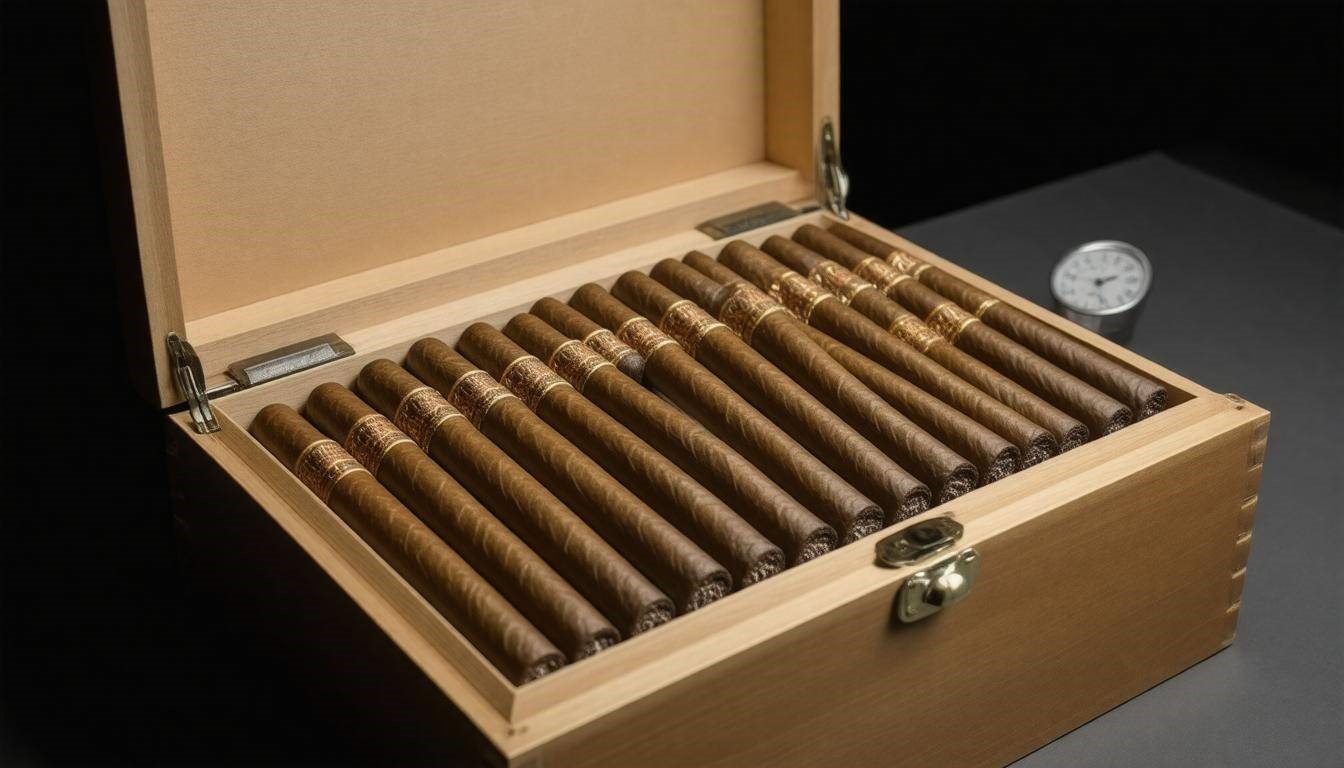
Humidors play a vital role in maintaining cigar quality, therefore understanding their function is essential. At their core, humidors are designed to create a stable environment for cigars, preserving them from undesirable conditions that could lead to spoilage.
Made typically from Spanish cedar, which is renowned for its moisture-retaining properties and pleasant aroma, these storage units ensure that cigars are kept within optimal humidity levels—about 70% relative humidity—while maintaining a temperature of around 70 degrees Fahrenheit.
Humidor Design
The design of a humidor is not just about aesthetics; it’s fundamentally about nurturing your cigars. Inside a high-quality humidor, you will usually find a humidification device, which releases moisture into the air to maintain those critical humidity levels. This prevents cigars from drying out, which can lead to harsh flavors and an unpleasant smoking experience. Additionally, the Spanish cedar panels give your cigars a gentle flavor infusion over time, which enhances their profile.
Now that we’ve covered what makes their design so imperative, let’s look into the different types of humidors available for various needs.
Types of Humidors
- Desktop humidors: These are often beautifully crafted and ideal for smaller collections, holding anywhere from 20 to 100 cigars. They fit neatly on a desk or shelf and typically have an attractive finish that enhances any room’s decor.
- Cabinet humidors: For serious collectors, cabinet humidors are suitable for large collections, capable of storing hundreds of cigars. Often resembling elegant furniture pieces, they provide ample space while ensuring excellent humidity control.
- Travel humidors: If you’re someone who enjoys cigars on the go, travel humidors offer portability without sacrificing quality. They’re designed to protect your cigars from physical damage and maintain humidity levels during travels.
While understanding the types of humidors can aid in selection, proper maintenance ensures their longevity and effectiveness.
Maintenance Tips
To keep your humidor functioning at its best, it’s crucial to season it before use. This involves wiping down the interior with distilled water—never tap water—to prevent mold growth caused by minerals. Afterward, calibrating your hygrometer—the device that measures humidity—regularly is equally important to ensure accuracy. Checking this at least once a week can help catch any fluctuations in humidity early on so you can make adjustments promptly.
Investing in good storage equipment enhances the aging process and maintains cigar quality over time. When consistently kept within ideal conditions, premium handcrafted cigars can truly reach their full potential and provide an exquisite smoking experience for years to come.
As we transition into exploring how the gradual passage of time affects flavor profiles and aromas in cigars, we uncover the intricate dance between storage conditions and the evolution of taste that every cigar enthusiast cherishes.
Effects of Aging on Flavor and Aroma
Aging can enrich the flavors and aroma of cigars but it requires patience and proper storage conditions. The time spent maturing allows the complex chemical compounds within tobacco to evolve, resulting in a smoother smoke that many aficionados appreciate. Each cigar has a story that unfolds over time, transforming its profile slowly into something greater than the sum of its parts. This maturation process often reveals itself after just a few years but may take a decade or more to reach its full potential.
Flavor Improvement
Over time, tannins in tobacco mellow, enhancing smoothness. This is one reason why some enthusiasts age cigars for 10-15 years to reach peak flavor. During aging, chemical compounds such as phenols and esters become more concentrated, adding sweetness and complexity to the cigar’s taste. Imagine first unwrapping a freshly rolled cigar; you might notice bold flavors that can be overwhelming if you’re not prepared. Now think of patiently allowing that same cigar to age for several years—what was once sharp becomes soft and rich, with flavors that mingle together like old friends catching up over coffee.
Complexity of Aroma
Aging allows different tobaccos to meld, creating a more complex and unique aroma profile. Initially harsh notes give way to subtler hints of cedarwood, chocolate, or even floral undertones depending on the tobacco varieties used. As tobacco leaves sit together in a controlled environment, they interact chemically, breaking down harsh compounds while enhancing the overall bouquet. Imagine walking into an old library: the scent of aged wood mixes harmoniously with delicate hints of leather and paper—this aromatic depth is akin to what occurs during the aging process in cigars.
Fan Experiences
Anecdotal evidence from devoted cigar enthusiasts illustrates how rewarding aging can be. One aficionado shared their remarkable journey of aging cigars for 20 years, noting a transformation into a richer, more harmonious blend of flavors and aromas. With each puff drawn from these long-aged treasures came waves of satisfaction—subtle complexities unfolding as if whispering secrets from past years spent in careful repose. These stories convey the delightful possibilities awaiting those who embrace patience in their cigar enjoyment.
Understanding how aging affects cigars not only enhances appreciation for this timeless craft but also sets the stage for recognizing critical tips about preserving their quality. This knowledge prepares us to navigate potential pitfalls in maintaining optimal conditions for our cherished cigars.
Common Storage Mistakes to Avoid
Many cigar enthusiasts make easily avoidable storage mistakes that can significantly affect the quality of their treasured cigars. One of the most prevalent issues is over-humidification. While maintaining an optimal humidity level (around 70%) is crucial, going beyond that threshold can invite problems. When cigars are stored in excess moisture, they can develop a spongy texture that ruins the smoking experience and can lead to mold growth.
Mold compromises both flavor and safety, so it’s vital to monitor humidity levels using reliable hygrometers.
Speaking of moisture management, many people mistakenly rely on tap water for humidification devices, which can be detrimental. Tap water contains various minerals and contaminants that can breed mold and negatively impact the flavor of the cigars. Instead, using distilled water is essential as it lacks these impurities, providing a cleaner environment for your cigars without promoting unwanted growth. This small habit change can make a world of difference in preserving your collection.
Yet another common mistake arises from neglecting one’s hygrometer.
Cigar aficionados should not underestimate the importance of the hygrometer, as it plays a critical role in monitoring the humidity inside a humidor. Regularly checking and calibrating your hygrometer is necessary; inaccurate readings may lead you to maintain improper conditions for your cigars unknowingly. While it might be frustrating to fiddle with equipment—like changing batteries or recalibrating—ensuring accurate humidity readings helps preserve the integrity of your cigars over time.
Additionally, avoiding overcrowding your humidor is crucial. A common oversight among collectors is cramming too many cigars into their storage space, which restricts airflow and creates uneven humidity distribution. This can lead to some cigars becoming overly dry while others become too moist, negatively affecting their flavor profiles. Keeping adequate space between each cigar ensures air circulation, allowing each one to mature evenly.
Finally, don’t forget about rotation.
Failing to rotate your cigars every few weeks can result in uneven aging within your collection. Cigars placed in the center of the humidor may receive less humidity than those on the outer edges, leading to an inconsistent quality experience when you finally light one up. By simply moving them around regularly, you promote uniform exposure to humidity, enhancing the overall aging process.
Take heed of these tips: by avoiding over-humidification, using distilled water only, frequently calibrating your hygrometer, ensuring ample space in your humidor, and rotating your collection regularly—your cigars will not only stay fresher longer but also deliver a vastly more satisfying experience every time you savor one.
In understanding proper storage techniques and addressing common mistakes, you can ensure that your cigar experience remains enjoyable throughout their shelf life.